
Choosing the best height for a changing table might seem like a small detail, but trust me—it can change your entire diaper-changing experience. The right height keeps your back happy, your baby safe, and your daily routine smooth. Let’s break down everything you need to know about selecting the perfect height.
Table of Contents
Why Changing Table Height Matters
Changing your baby’s diaper isn’t just a quick task—it’s something you’ll do thousands of times. That means ergonomics matter more than you think.
Preventing Back and Shoulder Pain
Ever leaned over a low table for just a few minutes? Your back lets you know instantly. Now imagine doing that 10–15 times per day. If your changing table is too low, you’ll hunch nonstop. Too high? Your shoulders and elbows strain. A good height helps you stand naturally.
Improving Baby Safety
A table that’s too tall increases the risk of slips and reaching accidents. Too low, and you might struggle to maintain a proper grip. The right height lets you stay centered, stable, and fully focused on your baby.
Enhancing Comfort During Diaper Changes
You shouldn’t feel like you’re wrestling with furniture while changing a diaper. The correct height keeps your arms at a relaxed angle so you can move quickly and smoothly.
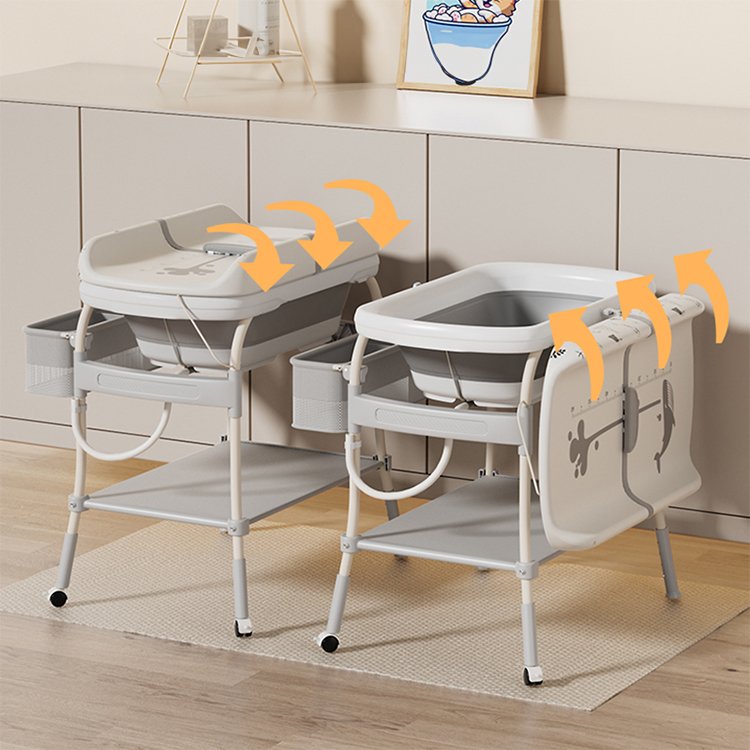
2 in1 Diaper Changing Table with Bath Tub
2 in 1 Baby Diaper Changing Table with Bathtub Customization Support Height Adjustment
Features
- 2-in-1 design: diaper changer & elevated bathtub.
- Easy function switch for convenience.
- Ergonomic height reduces maternal back strain.
- Adjustable height for all caregivers.
- Wheels for easy mobility.
- Spacious storage compartments.
- Robust steel frame with strong support.
- Prevents tipping for safety.
- 5-layer padded surface with breathable 3D mesh.
- Natural latex adds softness.
- Packaged for easy shipping.
What Is the Best Height for a Changing Table?
The truth? There isn’t a one-size-fits-all number. But there is a recommended range that works for most parents.
Standard Changing Table Height
Most store-bought changing tables sit between 34 to 36 inches (86–91 cm) high. This height works for the majority of adults.
Recommended Height Range for Most Parents
A comfortable height usually falls at or slightly above your hip bones, or around your belly button level.
Height Recommendations by Parent’s Height
To make things easy, here’s a quick breakdown:
If You’re Under 5’2″ (157 cm)
Aim for 32–34 inches (81–86 cm).
Anything taller may force you to lift your arms too high.
If You’re 5’3″–5’7″ (160–170 cm)
A height of 34–36 inches (86–91 cm) works best.
If You’re 5’8″–6’0″ (173–183 cm)
Look for 36–38 inches (91–96 cm).
This prevents the dreaded back hunch.
If You’re Over 6’0″ (183+ cm)
You’ll likely prefer 38–40 inches (96–102 cm).
Many tall parents complain that standard tables feel too low—so adjust accordingly.
How to Measure the Perfect Changing Table Height
The good news? You don’t need special tools or calculations.
Using Your Belly Button as a Guide
Stand naturally, place your hand on your belly button, and imagine the changing pad sitting at that height. That’s typically your ideal height.
Testing Height Before Buying
If you’re shopping in-store:
- Stand beside the table.
- Pretend to change a diaper.
- Make sure your forearms rest comfortably at a natural height.
If you’re shopping online:
- Compare product height to your preferred measurement above.
- Check review photos for real-life feedback.
Measuring Existing Furniture for DIY Changing Tables
Want to use a dresser instead?
- Measure from the floor to the top surface.
- Add the changing pad height (usually 2–4 inches).
- Ensure the combined height matches your ergonomic range.
Choosing Between Fixed and Adjustable Heights
Not all changing tables are created equal.
Benefits of Adjustable Changing Tables
- Perfect for households with parents of different heights.
- Ideal for grandparents or babysitters who help often.
- Allows ergonomic adjustments as your baby grows or your setup changes.
When a Fixed Height Is Ideal
- Low-budget setups
- Small nurseries with limited space
- Simple dresser-and-pad combinations
Fixed-height tables are stable, affordable, and easy to set up—just make sure the height matches your comfort range.
Tips to Improve Changing Table Ergonomics
Even the perfect height can be improved with a few tweaks.
Add-on Height Boosters or Platforms
Need an extra 1–2 inches?
Non-slip risers (like those used for beds) can lift the table safely.
Choosing the Right Changing Pad
Curved or contoured pads add height and keep your baby centered.
Flat pads may be safer for shorter parents.
Proper Storage Placement for Effortless Changing
Keep essentials—wipes, diapers, creams—within arm’s reach.
No bending, stretching, or leaning required.
Alternatives to Traditional Changing Tables
You don’t need a dedicated changing table to get the ideal height.
Dresser With Changing Top
This option is trendy for a reason:
- Saves space
- Offers extra storage
- Can be adjusted to suit your height
Portable Changing Stations
Great for small homes or travel.
Just make sure the surface you set it on matches your ideal height.
Bed and Couch Changing Options
These are cozy but can strain your back if used often.
Fine for quick changes, but not ideal long-term.
Final Thoughts
Picking the best height for a changing table isn’t about strict rules—it’s about finding a setup that supports your body and keeps your baby safe. Aim for a height that sits around your belly button, test it whenever possible, and don’t be afraid to customize your setup. After all, diaper duty will be a major part of your life for the next couple of years—so you deserve a comfortable, practical, and back-friendly solution.
FAQs
1. What if both parents are different heights?
Choose an adjustable-height option or base the height on whichever parent changes diapers more often.
2. Is a changing table necessary?
Not at all. A sturdy dresser with a changing pad works perfectly.
3. Can a changing table be too high?
Yes—if you have to raise your shoulders or tiptoe, it’s too tall and unsafe.
4. Does the pad height matter?
Absolutely. A thick changing pad can add 1–4 inches to the total height.
5. What’s the safest height for a changing table?
Any height that allows you to stand naturally while maintaining full stability and control over your baby.


