
Choosing the best playard for babies can feel overwhelming—especially when every brand promises “ultimate safety,” “maximum comfort,” and “travel-friendly design.” If you are a parent juggling naps, playtime, work-from-home life, and occasional travel, a playard quickly becomes one of the most useful baby products you will ever own.
Think of a playard as your parenting safety net. It is a secure sleep space, a contained play zone, and sometimes even a diaper-changing station—all folded neatly into one product. In this guide, we will break everything down in plain English, help you avoid common mistakes, and show you exactly how to choose the right playard for your baby and your lifestyle.
Table of Contents
- What Is a Playard and Why Do Parents Need One?
- Key Benefits of Using a Playard for Babies
- Types of Playards Available on the Market
- Safety Standards and Certifications to Look For
- Comfort Matters: Mattress, Fabric, and Ventilation
- Size, Weight, and Portability Considerations
- Ease of Assembly and Daily Use
- Best Playard for Newborns
- Best Playard for Travel
- Best Playard for Small Apartments
- Best Playard for Long-Term Use
- Budget vs Premium Playards
- Common Mistakes Parents Make When Buying a Playard
- How to Choose the Best Playard for Your Baby
- Final Thoughts
- FAQs
- Share This Case:
What Is a Playard and Why Do Parents Need One?
A playard (also called a playpen or pack-and-play) is a portable enclosure designed for babies and toddlers to sleep, rest, or play safely. Unlike cribs, playards are lightweight, foldable, and easy to move from room to room.
Playard vs Crib vs Bassinet
Each product serves a purpose:
- Cribs are permanent and ideal for nighttime sleep.
- Bassinets are perfect for newborns but have limited lifespan.
- Playards offer flexibility—usable from newborn stage through toddlerhood.
If cribs are the “home base,” playards are the reliable backup everywhere else.
When Can a Baby Start Using a Playard?
Most playards are safe from birth, especially models with a bassinet insert. Babies can typically use a playard until they reach the manufacturer’s weight or height limit—often around 2 to 3 years old.
Key Benefits of Using a Playard for Babies
Safety and Containment
A quality playard creates a controlled environment where your baby can roll, crawl, and play without risk. Mesh sides allow visibility while preventing climbing or falling hazards.
Convenience for Parents
Playards are lifesavers during busy days. Need to shower? Answer a call? Make dinner? A playard keeps your baby close, visible, and safe.
Daytime Play vs Nighttime Sleep
Many parents use playards for naps during the day and occasional nighttime sleep, especially when traveling or room-sharing.
Types of Playards Available on the Market
Standard Playards
These are simple, durable designs meant for everyday use. They usually include a mattress pad and mesh sides.
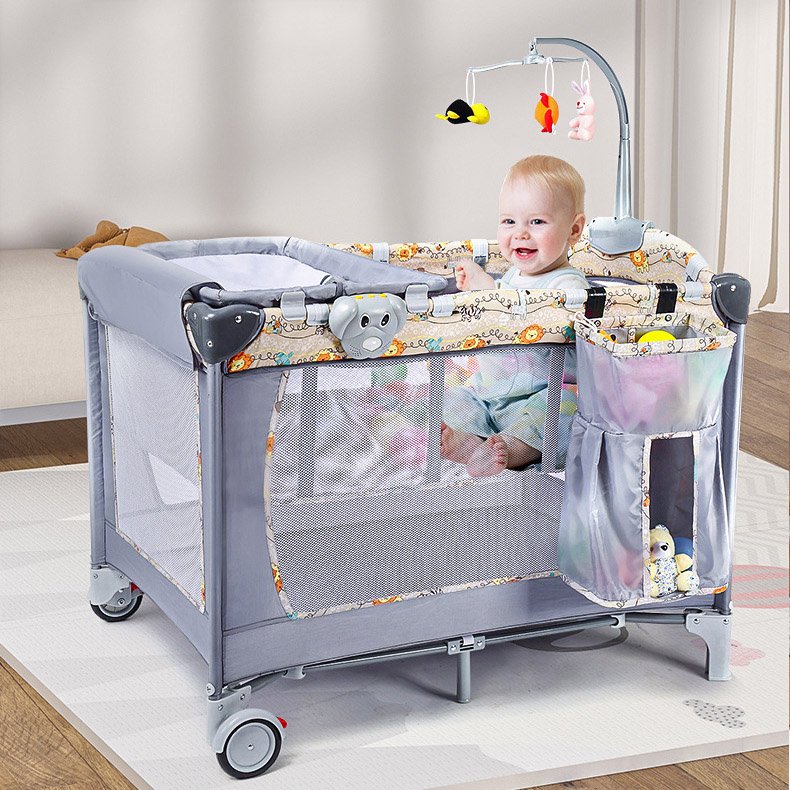
Wholesale Baby Nursery Center Playard
Multi-Function Wholesale N in 1 Baby Nursery Center Playard
Features
- With two wheels with brake
- With toy bag
- With zipper door
- With changing table
- With hook second layer
- With Toy bar
- With a mattress
Travel Playards
Travel playards are lightweight, ultra-compact, and designed for frequent folding and unfolding.

Play Portable Crib Playard
Multi-Function Easy Setup Baby Portable Playard
Features
- Lightweight
- Portable
- Breathable
- Comfortable
- Tool-free Assembly
Foldable Mobile Smart Baby Crib with Camera and APP Control
Equipped with calming white noise, lullabies, and customizable sound settings to promote longer, more restful sleep.
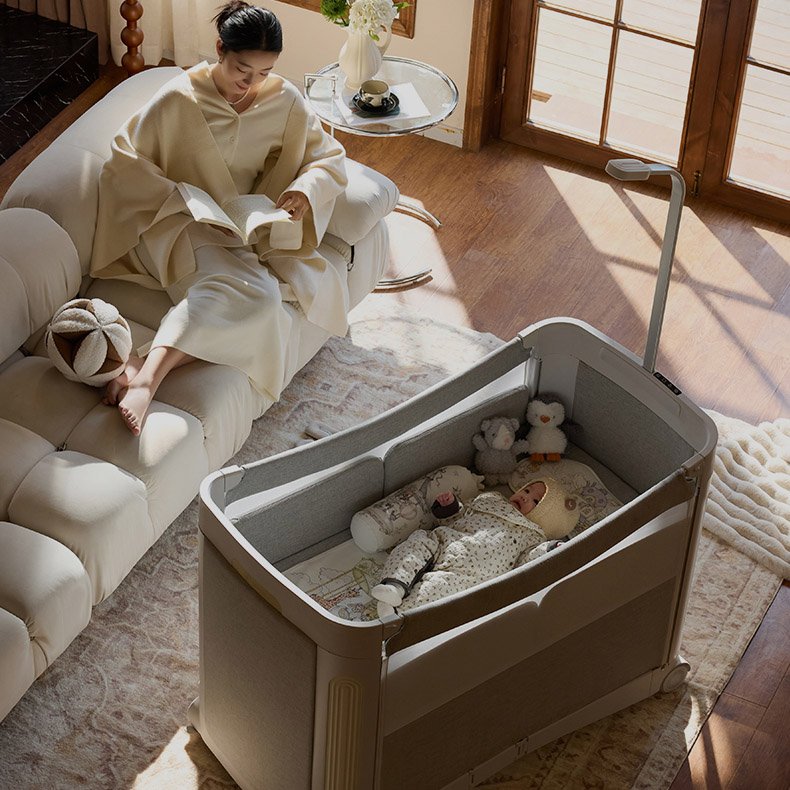
Foldable Mobile Smart Baby Crib with Camera and APP Control
Foldable Mobile Smart Baby Crib with Camera and APP Control
Features
- Built-in camera AND APP control
- Night Light Function
- Music Playback Function
- Mattress Shock
- Absorbing AND Anti-Regurgitation
- Foldable AND tool-free assembly
Playards with Bassinet and Changing Table
Some models include removable bassinets, diaper changers, storage pockets, and even toy bars—perfect for newborns.

Luxury Playard With Bassinet and Changing Table
Multi-Functional Playard with Bassinet and Changing Table – All-in-One Nursery Solution
Features
- Flip away changing table
- Removable full bassinet
- One hand locking mechanism
- Two large wheels with brakes for added security
- Easy compact fold
- Travel/storage tote bag
Safety Standards and Certifications to Look For
JPMA, ASTM, and CPSC Guidelines
Always choose a playard that complies with recognized safety standards. Certifications ensure the product meets strict requirements for stability, material safety, and structural integrity.
Materials and Non-Toxic Finishes
Look for BPA-free plastics, lead-free paints, and breathable mesh. Babies chew on everything—materials matter more than aesthetics.
Comfort Matters: Mattress, Fabric, and Ventilation
Mattress Thickness and Support
Playard mattresses are thinner than crib mattresses by design, reducing suffocation risks. However, firmness and support should still feel comfortable.
Breathable Mesh Sides
Mesh panels promote airflow, reduce overheating, and allow you to keep an eye on your baby from any angle.
Size, Weight, and Portability Considerations
Small Spaces vs Large Rooms
If you live in an apartment or share a room, compact footprints are essential. Larger homes may benefit from full-size playards.
Foldability and Carry Bags
A good playard should fold in under a minute and fit neatly into a carry bag for storage or travel.
Ease of Assembly and Daily Use
One-Hand Folding Systems
Modern playards often feature quick-lock mechanisms that make setup almost effortless—even when holding a baby.
Cleaning and Maintenance
Removable, wipe-clean fabrics are a must. Babies are messy, and easy cleaning saves time and stress.
Best Playard for Newborns
Bassinet Height and Newborn Support
For newborns, elevated bassinets reduce bending and protect your back. Ensure the bassinet has firm support and secure attachment.
Best Playard for Travel
Lightweight Frames and Compact Fold
Frequent travelers should prioritize weight, fold size, and durability. Aluminum frames and minimal accessories work best on the go.
Best Playard for Small Apartments
Slim Designs and Multi-Use Value
Look for playards that double as sleep and play spaces without taking over your living room.
Best Playard for Long-Term Use
Weight Limits and Growth Stages
Choose a playard that adapts from newborn to toddler. Adjustable mattress heights and sturdy frames extend usability.
Budget vs Premium Playards
What You Get at Different Price Points
- Budget models: Safe, basic, functional
- Mid-range: Added comfort and convenience
- Premium: Superior materials, smoother mechanisms, modern design
Common Mistakes Parents Make When Buying a Playard
- Choosing style over safety
- Ignoring weight limits
- Buying oversized models for small homes
- Overlooking ease of cleaning
Avoid these pitfalls, and you will enjoy stress-free use.
How to Choose the Best Playard for Your Baby
Ask yourself:
- Where will I use it most?
- Do I need travel capability?
- How long do I want to use it?
- What safety certifications matter to me?
The best playard is the one that fits your lifestyle—not just your budget.
Final Thoughts
The best playard for babies is not about brand names or flashy extras—it is about safety, comfort, and practicality. A well-chosen playard becomes a trusted companion through naps, playtime, travel, and everyday moments. When selected thoughtfully, it simplifies parenting and gives you peace of mind when you need it most.
FAQs
1. Can a baby sleep overnight in a playard?
Yes, as long as the playard meets safety standards and is used according to manufacturer guidelines.
2. Are playards safe for newborns?
Absolutely, especially models with a certified bassinet insert.
3. How long can a baby use a playard?
Most playards are usable from birth up to 2–3 years, depending on size and weight limits.
4. Do playards replace cribs?
They can supplement but not fully replace cribs for long-term nighttime sleep.
5. What is the most important feature in a playard?
Safety compliance, followed closely by stability and ease of use.


Solid platform with a very user friendly design. I had a small issue with my deposit but the chat support fixed it in minutes. Love vnhp66.